

The material selection of thin film panels plays a decisive role in their overall performance. Including surface film materials, printing inks, adhesive layers, and conductive materials, etc
The multi-layered structure inside has a direct impact on the weather resistance, reliability, and operational experience of the product due to the material properties of each layer.
The surface material is usually PET (polyester) or PC (polycarbonate). PET has strong chemical corrosion resistance and mechanical strength, making it suitable for high-frequency operation scenarios; PC has better flame retardancy and UV resistance, and is commonly used in outdoor equipment or control panels with special requirements for weather resistance.
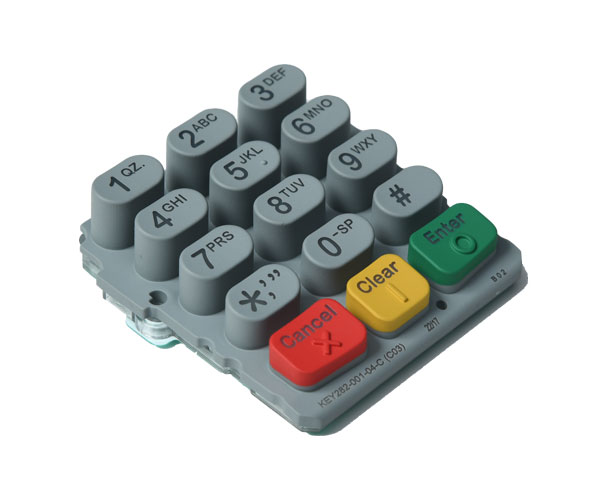
The stability of printing ink is directly related to the durability and recognition of graphics and text. Using specialized screen printing ink that is UV resistant, alcohol resistant, and has strong adhesion can effectively prevent fading, word dropping, and other phenomena, extending the product's service life.
The adhesive layer is a key part to ensure the firm adhesion of each layer structure. Its temperature resistance, initial adhesion, and long-term adhesion directly determine the stability of the panel in various temperature and humidity environments. In industrial applications, high-performance adhesive materials such as 3M are often used to ensure stability and non displacement under high humidity or high temperature conditions.
Conductive materials are commonly used in thin film switch components, such as silver paste circuits. The silver paste with high conductivity and low resistance can ensure stable transmission of the circuit, avoid signal attenuation and misoperation, and ensure sensitive response of the control system.
Overall, material selection not only determines the functional performance of the panel, but also affects the subsequent manufacturing process and product consistency. Reasonably configuring material schemes based on application environment, functional requirements, user operation frequency, and other conditions is the core of achieving high-performance thin film panels.
Address:Room 601, Building 9, No. 180, Maozhushan Road, Changping Town, Dongguan City, Guangdong Province, C
Domain:m.ki518.cn
E-mail:zhangjianfei@dgkdmembrane.com